
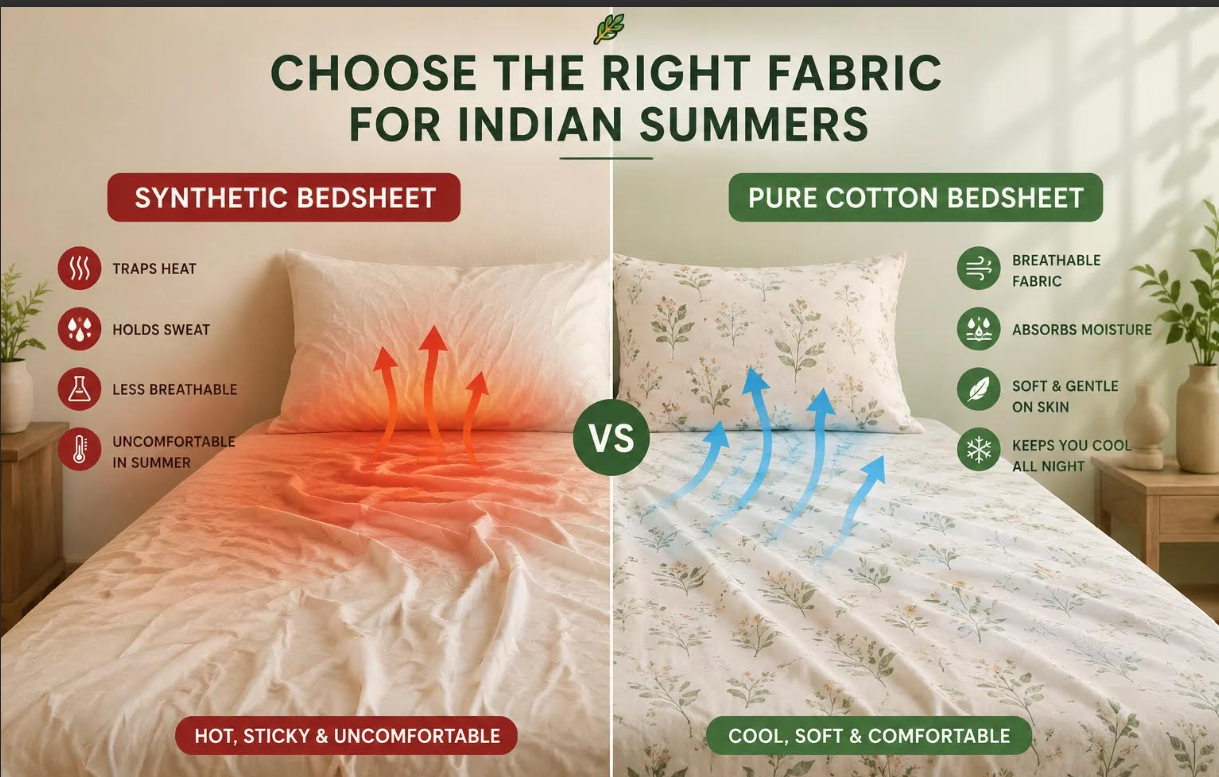
By March, the fan runs all night. By July, even that stops helping. Indian summers push into 40°C and stay there — and if your bedsheet is synthetic, you feel every degree of it. The sheet clings, the sweat builds, and you spend the night half-awake.
Switching to a handmade pure cotton bedsheet won’t fix the weather. But it changes how you sleep through it. Cotton moves heat away from you. Simple as that.
Why Does Your Bedsheet Fabric Matter More in Summers?
Pick up any bedsheet in a store, and it feels fine — smooth, nicely printed, decent weight. But most of what’s on the shelf is made for temperate climates. Come May in India, those same sheets feel like sleeping under plastic.
Synthetic sheets hold heat. Sweat doesn’t go anywhere — it just sits there. By 3 AM, you’re shifting positions, kicking off the sheet, wondering why you’re this tired in the morning.
The problem isn’t just heat — it’s trapped humidity. India’s summer nights stay sticky well past midnight. A non-breathable fabric holds that moisture against your skin all night. Worth noting: not every cotton bedsheet solves this. Thick weaves and cotton-polyester blends can be just as bad.
Features of a good cotton bedsheet
A good summer bedsheet does four things well:
- It allows air to circulate
- It absorbs moisture
- It feels light against your skin
- Releases heat rather than holding it in
What Makes Cotton the Right Choice — and Which Cotton
Pure cotton bedsheets have been used across India for centuries — not by accident. Cotton is a natural fiber that breathes, pulls moisture away from the skin, and gets softer with every wash. No synthetic fabric does all three.
But not all cotton is equal. Here’s what to actually check when buying a cotton bedsheet for summer:
1. Thread count is not everything
Thread count is the most misunderstood number in bedsheet shopping. Higher doesn’t mean better — especially in summer. Manufacturers push thread counts up by using thin, multi-ply yarns twisted together, which actually makes the fabric denser and less breathable. For Indian summers, 180–300 TC is the sweet spot.
2. Weave matters more than most people realize
Most people skip right past weave when buying bedsheets, but it matters more than thread count in summer. Percale — the classic weave of Indian handloom cotton — gives you a crisp, cool finish that stays breathable through the night. Sateen feels silky but runs warmer. Percale is the better pick for Indian summers, and it makes for abreathable bedsheet that stays noticeably cooler than sateen through the night.
3. Single-ply yarn is better for summer
Single-ply yarn keeps things simple — and that simplicity is the point. Lighter thread, more open weave, better airflow. Hand-woven single-ply cotton is hard to beat for sleeping through a hot Indian night.
4. Handloom cotton bedsheets are moisture-wicking
Moisture wicking means one thing: sweat leaves your skin instead of pooling on it. Handloom cotton does this without any special treatment — the natural fiber and open weave let sweat reach the surface and dry off. No finishing chemicals, no marketing terms needed.
Cotton vs Synthetic Bedsheet
Synthetic bedsheets fill most store shelves. Cheap to produce, available in every print, and they photograph well. But when summer hits, the difference shows quickly.
✦ Pure Cotton Bedsheet
- Breathable
- Good at absorbing moisture
- Gets softer with each wash
- Ideal for warm and humid climates
- Hypoallergenic — gentler on sensitive skin
✦ Syntheic Fabric Bedsheets
- Tend to hold heat
- Poor breathability
- Tend to feel warm on the skin
- Dry fast but are not good absorbers of moisture
What Features Actually Matter and Why?
Specs only tell you so much. These are the things that actually show up when you’re trying to sleep in a hot room:
✦ Lightweight Fabrics Make a Big Difference
A light cotton bedsheet doesn’t announce itself. You get in, it settles, and it’s breathable, soft to touch, and gentle on the skin. No weight, no stuffiness. Air passes through and your body handles the rest.
One bedsheet swap. Real difference in how you sleep.
✦ Handmade Cotton adds another layer
How a fabric is made changes how it behaves.
Machine looms move fast, so the weave ends up tight. Tight weave = less airflow. Handloom cotton is woven at a slower pace, the threads sit looser, and that gap is what lets air through. Small difference in process, big difference on a hot night.
✦ A Softness that Lasts
Cotton gets better after every wash. Ten washes in, it’s softer than the day you bought it. Synthetics tend to go the other direction — they pill, stiffen, and start holding smell after a few months of regular washing.
✦ Durability and Sustainability
Natural dyes from plants and minerals mellow over time — they don’t suddenly fade after three washes. A properly dyed handloom bedsheet holds colour for years. No synthetic dye chemicals, nothing irritating against your skin overnight.
✦ Timeless Designs
There’s also just how it looks. Handloom cotton — block prints, florals, bird motifs, soft geometrics — sits differently in a room than a shiny synthetic sheet. It’s less hotel, more home. Light colours in summer especially make the room feel cooler before you even lie down.
Final Thoughts
Most people don’t think about bedsheet fabric. Until they’re up at 2 AM and the room is still 38 degrees.
At that point, the fabric you’re lying on is part of the problem or part of the solution. There’s not much middle ground in a 42°C summer night.
Handwoven, hand-block printed cotton isn’t new — it’s what Indian homes relied on before synthetics made everything cheaper and worse. It lasts, it softens, and it actually lets you sleep. One night on natural cotton in May and the comparison makes itself.
FAQ’s
- What is a summer bedsheet fabric?
Summer bedsheet fabrics are lightweight, natural fabrics — cotton, mulmul, or linen — that allow air circulation and are suited to India’s hot and humid climate. - Why are breathable bedsheets important for Indian summers?
When air moves and sweat can escape, you sleep cooler. In Indian summers — where nights stay humid — that’s often the difference between decent sleep and a rough one. - Is a pure cotton bedsheet better than a synthetic one?
Yes. Cotton breathes, synthetic doesn’t. Open a window on a 40°C night and you’ll feel it within an hour. - How often should you change your bedsheets during summer?
Once a week works for most people. If you sweat heavily or live in a humid region, every 3–4 days is more practical during peak summer months.