
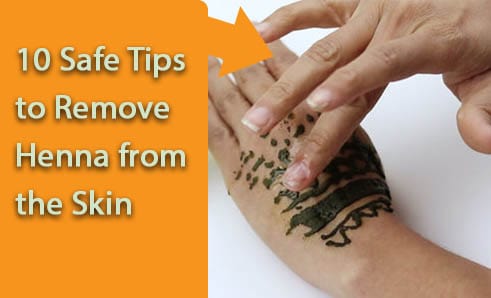
Safe Tips to Remove Henna from the Skin after it is not needed. Most of the henna gets removed by itself, but sometimes you may need to remove it earlier.
Henna is simply a dye in powder form, which is extracted from the leaves of the henna plant, called Lawsonia inermis, scientifically. This henna is used for making temporary tattoos over the skin.
Removing henna from the skin is not so difficult, but it should be known and should be done safely. Here we will be discussing removing henna from hair, too.
10 Safe Tips to Remove Henna from the Skin
Whenever you remove henna from the skin, you should be aware of the health of your skin. Generally, you should be well-known about the materials you are using.
Sometimes it may create allergies to the skin, too. Maybe sometimes the chemical you are using can damage the skin, too.
We are listing 10 safe tips to clear henna from the skin, or simply, we can sa,y removing henna tattoos.
1. Use a scrub to remove Henna
By scrubbing your skin with henna Mehndi, you can remove the henna. While scrubbing, you can use an exfoliating face or body wash. These exfoliating scrubs may help remove henna quickly. This is one of the tips on how to remove henna in an early time period.
In the same way, you can use a natural exfoliating agent, like apricot or brown sugar, to minimize irritation to your skin.
After exfoliating your henna tattoo from the skin, keep in mind that you should use a moisturizer or apply coconut oil over it. It will help to heal the damaged skin and keep your skin healthy.
“Did you know? CBD can actually help with skin health as well. You can visit a weed store near me for more information!”
2. Go swimming to remove henna
The public pool generally contains chlorinated water. This chlorinated water automatically removes the henna from the skin. It may not be removed at once. But it will fade out slowly. You don’t need to use any chemicals; it will be done automatically.
If you stay in the pool for forty minutes to one hour, you will notice that the henna on your skin will fade. So, going swimming multiple times can remove henna from the skin.
3. Use of Antibacterial soap
Antibacterial soaps usually contain high alcohol content. This alcohol in the soap will aid in removing henna from the skin. Using antibacterial soap will help to get rid of the henna dye.
In order to remove henna from the skin, you need to wash or scrub your hands a few times a day with antibacterial soap.
But you need to be careful about drying out your skin by using the soap, so for this, you can use moisturizing cream after making dry of your hands.
4. Use of Makeup Remover
Different types of makeup removers are found in the market to aid in the removal of henna tattoos. You can use the makeup remover to remove henna from the skin. But keep in mind, don’t use it for the removal of hair. It can damage your hair as well. Especially, any silicone-based makeup remover can work.
Use a cotton swab to soak off makeup, then soak over your henna tattoo in the skin tattoo and then remove the makeup remover with a dry cloth. Repeat this process multiple times. Slowly, the Mehendi henna fades out and is finally removed multiple times.
5. Use of Hydrogen peroxide
Hydrogen peroxide has multiple uses. You can use hydrogen peroxide to remove the henna from the skin. Whenever you use it, do use the concentrated hydrogen peroxide. It can burn your skin. So always use diluted hydrogen peroxide to remove.
You need to take in cotton or gauze and wipe it out gently. Slowly, the henna dye will lighten the appearance of your skin. After several uses, it will be removed completely
6. Use of Lemon Juice with Baking Soda
As we all know, Lemon juice is a skin-lightening agent. How to remove henna with lemon juice and baking soda is an easy home method. A combination of Baking soda and lemon juice can work together to lighten the henna dye and make it disappear faster.
The next thing to keep in mind is that never apply baking soda and lemon juice to your face directly. It can cause irritation of the skin.
Lemon Juice to remove henna from skin
Method of use of lemon juice with baking soda to remove henna from the skin :
- Take half a cup of warm water, a full tablespoon of baking soda, and two teaspoons of lemon juice.
- Apply this mixture with a cotton swab and let it soak into your skin before removing it.
- Keep repeating the process until the henna can’t be seen.
7. Use of Spirit Swab
Spirit is full of alcohol, you can you this spirit to remove the henna dye from the skin. Take a cotton swab and soak it with spirit.
Use the spirited cotton swab to wipe the henna dye on the skin. Slowly, it will fade out. You need to do it multiple times for the final removal of the henna dye from the skin.
8. Use of Toothpaste
Using toothpaste, you can remove henna from the skin. It is an easy and natural way to remove. Especially the whitening ingredients of your toothpaste are good to use, and they are very safe to use. But you should keep in mind that some may have allergies to toothpaste.
So use the available toothpaste over the skin where there is a henna dye or Mehendi. Wait for some time to make it dry, and then rub it slowly for 10-20 minutes. Then wash the area, you will find the henna dye has faded, and finally, it will be removed after some more attempts.
9. Use of Coconut oil with sugar
A mixture of coconut oil and raw sugar makes an exfoliation agent. First, use coconut oil to rub over the skin where there is a henna dye for some time.
Let it sit for some time so that it will absorb it before layering the raw sugar on top. Now rub the sugar over your tattoo before applying pressure with the washcloth to remove the oil and sugar from the skin. You will see henna dye removed from the skin.
10. Use of Hair Conditioner
Hair conditioner, which is generally used for hair conditioning purposes, can also remove henna from the skin. You can apply the conditioner to the tattoo and make sure your skin has time to absorb it fully.
Then rinse off with warm water, and you will see it is removed without any damage to the skin and surroundings.
What is a Henna Tattoo?
Henna Tattoos are a beautiful art done on the skin, especially on the forearm, hand, and legs. Simply, a Henna tattoo is temporary art drawn on the hands and feet during different occasions and festivals.
Henna tattoos are drawn using a special drawing pouch with the henna paste. Henna Paste can be made from powder, or you can get ready-made paste for the drawing.
When it is drawn, henna tattoos usually darken in 2-3 days, and they stay maximum of about two weeks.
What is Henna Dye?
Henna dye is a natural dye that can be found in powder form and paste from which is an extract from the Henna plant used for coloring the hair and painting the skin. This henna dye lasts for almost one to two weeks, which then starts to fade slowly. Since ancient times, Henna has been used to draw different designs on different parts of the body in many religions. This temporary tattoo art is referred to or termed as mehndi.
What is Mehndi and Henna?
Mehndi is a form of body art believed to have originated in ancient India, as it has been used to color the skin with different designs. It can be said that decorative designs are created on a person’s body, especially on the skin. Not only in India it has also been widely used, especially among South Asian people in different religions.
Mostly, this Mehndi is used by the Hindu people and Muslims in their different festivals and occasions, by bridal makeup artists in Hyderabad or other places. As mentioned earlier, it is a temporary art on the skin and will be removed by itself. But sometimes you may need to remove it soon for different purposes. So, we have mentioned some tips to remove henna as how to remove the henna tattoo from the skin.
Conclusion
So, these are overall common steps and tips to remove henna from the skin that should be safe. Sometimes, when applying, it can also irritate the eyes. You must know the safety tips before using and during the application.
We will bring out removing henna from hair too in the near future in the coming posts.
nice tips to know. great going. i love your contents regading henna. Write more on henna …
Great to know the tips. Thanks lots . Want to see more and more tips. Waiting for more tips health too.
Anyway site is very good with lots of article s.
Great posts.love the way of explanation. I really liked the whole content. I enjoyed.
I got more knowledge on the henna and it’s removal