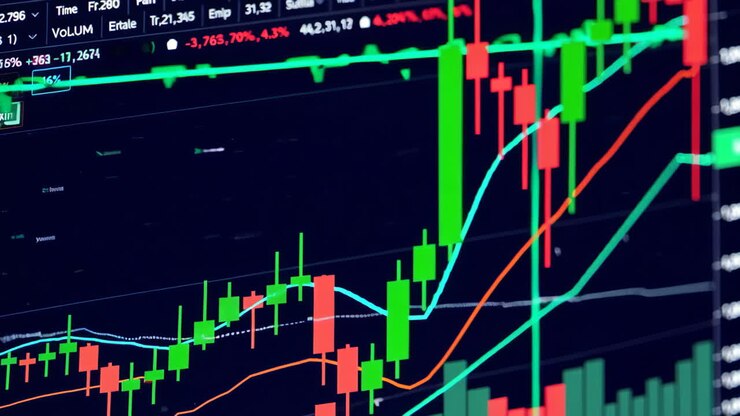
Before price commits to a direction, it speaks through market structure. Most traders spend years learning how indicators and oscillators work before realizing that the underlying layer beneath all of it is simply price organizing itself over time.
- What Are Guest Post Guidelines? A Beginner’s Guide

- Link Exchange in SEO: A Complete Guide to Know

- The Art of the Hook: How to Write Enticing Introductions in Blogging and Essay Writing

- How a Website Audit Helps Improve User Experience and SEO Together

- What SEO Content Tips Top Digital Marketing Firms Always Follow

- How to Rank Your Blog in Google’s Top 10 Search Results

The highs, the lows, the consolidation points, and the gaps between them tell a story that no single indicator can fully capture. Traders who learn to read that story before the move develops operate from a position of anticipation rather than reaction, and that distinction keeps one class of trader permanently a step ahead of the other.
Reading Market Structure
Reading market structure effectively requires a clean visual space. A cluttered chart introduces noise that can distort judgment, particularly during transitional periods when price is moving between structural phases. Serious practitioners use TradingView charts because the platform allows traders to reduce the workspace to what matters, plotting only the tools required for the specific structural analysis at hand. A trader mapping a succession of lower highs in a bearish market does not need a dozen indicators to confirm what the structure already shows. The case is made by the architecture of price action itself.
Understanding Accumulation Zone
Understanding accumulation zones is where many developing traders find their footing. When price is compressed into a narrow band following a significant move, the market is effectively pausing while larger participants absorb or redistribute positions.
One retail trader described watching a currency pair consolidate for eleven days on the four-hour chart without feeling compelled to force a trade until the structure provided a clear signal. When the breakout came with volume confirmation, the subsequent move extended nearly three times the width of the consolidation range. That patience was not passive but the product of actively reading what the structure was communicating.
Swing points form the foundation of any meaningful structural analysis. A sequence of higher highs and higher lows is more than a pattern to memorize. It reflects buyers defending levels and sellers failing to reclaim ground. Once that sequence breaks, when price fails to post a higher low and instead undercuts the previous swing, the structural narrative shifts in a way no lagging indicator will capture in time to be useful, because the transformation is visible in price before it registers anywhere else.
Single-chart analysis limits
Single-chart analysis limits structural reading, and multi-timeframe alignment provides the deeper perspective needed to compensate. A bullish structure on a fifteen-minute chart carries considerably less weight when the four-hour chart is pressing against a clear resistance area.
On TradingView charts, traders overlay these timeframes, switching views without losing their spatial sense of where key levels sit. A coherent structural picture only emerges when the short-term and medium-term narratives align, or when their conflict is explicitly recognized and accounted for.
Where experienced traders most clearly separate themselves from beginners is in how they handle structural ambiguity. Price does not always form textbook sequences. There are periods of genuine indecision when highs and lows overlap with no clear directional bias, and forcing a structural narrative onto such price action is a reliable way to enter losing trades with misplaced confidence.
Conclusion
The more disciplined response is to acknowledge the structural lack of clarity, wait for the market to resolve it, and commit only when it does, because recognizing ambiguity for what it is represents a form of market intelligence that keeps traders out of positions where the odds are genuinely undefined.

Facebook Discussion