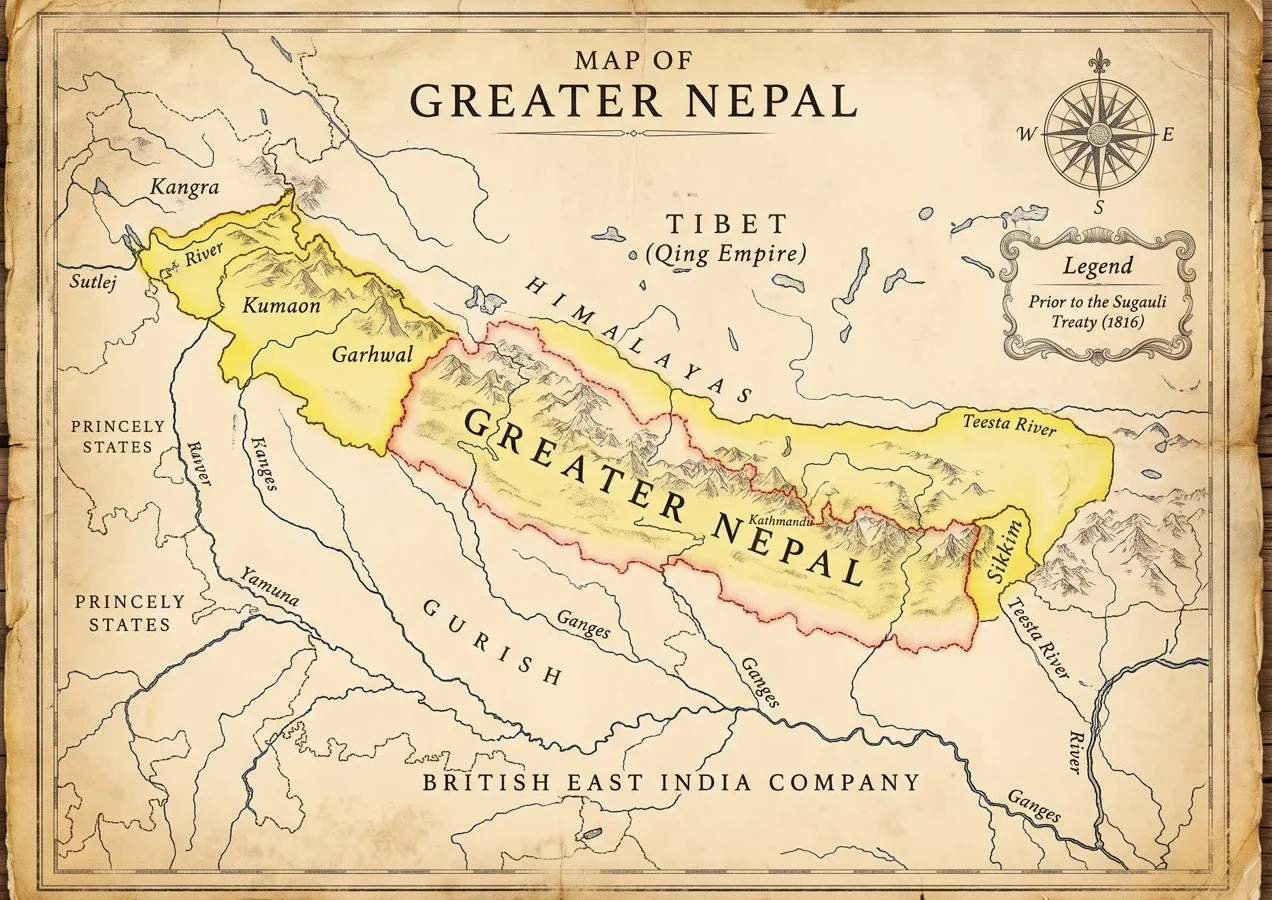
It is a very controversial issue in Nepal and India. The Greater Nepal encompasses the area Nepal occupied prior to the Anglo-Nepalese War (1814-1816) that most Nepalis believe was unjustly surrendered to the Sugauli Treaty. This article clarifies the idea, the six reasons of its advocates and the opposition.
- What is Link Exchange in SEO: A Complete Guide to Know

- The Art of the Hook: How to Write Enticing Introductions in Blogging and Essay Writing

- How a Website Audit Helps Improve User Experience and SEO Together

- What SEO Content Tips Top Digital Marketing Firms Always Follow

- How to Rank Your Blog in Google’s Top 10 Search Results

- Top SEO Trends for 2026: Strategies to Refine Your Content

What Is Greater Nepal?
Greater Nepal is the territory of Nepal at its maximum extent. It is the area covered by Nepal in the early 1800s, from the Teesta River (near Sikkim and Jalpaiguri) in the east, to the Sutlej River in the west, after the unification campaigns of King Prithvi Narayan Shah and his successors.
Following its defeat by British East India Company, Nepal signed Sugauli Treaty of 1815 ( ratified in 1816) and ceded much territories like Kumaon, Garhwal and regions of Terai and Sikkim. In 1860, the plains of Banke, Bardiya, Kailali and Kanchanpur were awarded to Nepal for its assistance to the British during the rebellion in 1857.
Which Areas Are Included?
Regional claims Followers of this school often cite Kumaon, Garhwal, Nainital, Darjeeling, a part of Sikkim and a part of Terai. [Add a map and source for the figure of area, since Nepal’s area now stands at nearly 147,181 km².]
Six Points Supporters Will Use
It was signed after a military defeat and, as such, supporters believe it was under duress and is invalid.
East India Company; A company which is no longer in existence.
Treaty party It was made with the Company, not with the Republic of India.
“Indefinitely”: Others claim that the language indicates the land was granted for a limited term. Historians and attorneys tend to interpret this phrase as lasting forever, so it is one of the least convincing allegations.
Coming back of land: Proponents argue the 1860 return of the western Terai to demonstrate the borders were flexible.
Treaty of Peace and Friendship between Nepal and India (Article 8) annuls prior arrangements between the British Government and Nepal Supporters argue this involves Sugauli.
The Counter-View
The opposition argues that:
The status of international law on coerced treaties in 1816 does not have retroactive application.
Traditions continue even after state succession. Boundaries of the states also continued after state succession. The boundary drawn in India is inheritable from British India.
The subject matter of all references of the 1950 treaty is dealt with in that treaty and not border settlements.
Nepal and India have in fact acknowledged the current border.
Conclusion
Greater Nepal is still a major theme of Nepali nationalism and history, but legal scholars and historians disagree whether it has any legal merit. Primary texts, like the treaty texts, provide a basis for readers to form their own opinion.





Nice one. Keep up