Walk down any retail aisle, and most products never get a second look. Not because they’re bad, usually, but because they’re sitting in a flat, forgettable box that blends into everything around it. A display box is supposed to fix that problem, and whether it actually does comes down almost entirely to how it’s shaped, how it opens, and where it directs the eye before a customer’s even picked anything up.
Structure Decides What a Customer Sees First
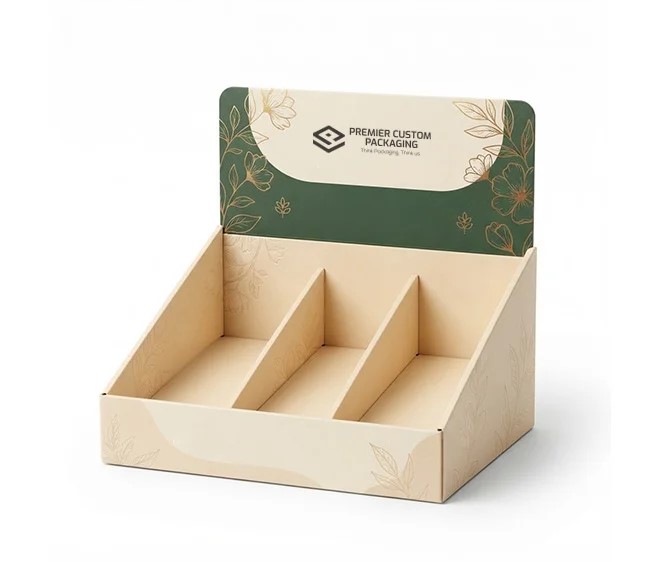
A flat-fronted box sitting on a shelf competes on equal footing with everything next to it. There’s nothing pulling attention toward it specifically. Angled or tiered display structures alter that situation by physically rotating the product so that it is tilted toward the eye, or by arranging products into steps or rows so that the products in front don’t obstruct those in the back. This little design decision can make the difference between someone seeing your product and not.
The same principle applies to large-scale counter displays and shelf-ready packaging. The organization of a cluttered counter or shelf that’s supposed to be organized but isn’t is accomplished by the very structure.
Opening Mechanism Changes the Whole Interaction
How a display box opens matters almost as much as its shape. A box that opens flat into a tray lets a customer see the full product range at once, which works well for smaller items sold in multiples, lip balms, small electronics accessories, that kind of thing. A box that opens upward with a hinged or lift-off lid, by contrast, tends to suit single, more premium items better, since it creates a small reveal moment rather than putting everything on view immediately.
Getting this mismatched, flat-open tray structure for a single premium item, say, usually undersells the product, since there’s no sense of occasion to the reveal. The wrong mechanism for the product type quietly undercuts whatever the actual product is trying to communicate.
Why Stability and Structural Integrity Matter More in Retail Settings
A display box isn’t just sitting still in a warehouse; it’s being touched, picked up, and occasionally knocked over by someone reaching past it for something else. Structures that aren’t built to hold their shape under that kind of casual handling tend to look tired fast: corners soften, tiers sag, the whole thing starts looking less like a display and more like a box that’s had a rough week.
Reinforced bases and internal supports matter here more than they would for a box that’s just shipping a product from point A to point B. A display box has a longer, more public life than a shipping box, and it needs a structure built for repeated handling.
Matching Display Structure to the Product Being Sold
Small, multi-unit products, cosmetics, snack items, and accessories generally do well in tiered or stepped displays that allow several units to be displayed at once without stacking directly on top of each other.
Single-premium items, a flagship product, and a limited release tend to benefit from a more enclosed structure with a deliberate opening motion, since the goal here is to build a moment of anticipation rather than show everything at a glance.
Counter-top impulse items need compact, stable bases above almost anything else, since these displays sit in high-traffic spots and get bumped constantly.
Seasonal or promotional displays often lean into bolder structural shapes, something that reads as temporary and eye-catching since these aren’t meant to blend into permanent shelving; they’re meant to stand out from it.
Speed of Production Matters for Promotional and Seasonal Runs
A lot of display packaging decisions happen on a tight timeline, a seasonal push, a promotional tie-in, a product launch that can’t slip. This is where custom display boxes with fast shipping have become a real factor in sourcing decisions, since a well-designed display structure doesn’t help much if it arrives after the promotional window has already closed. Brands working on compressed timelines increasingly prioritize suppliers who can turn around custom structural designs quickly, even if it means a slightly higher per-unit cost than a longer production run would allow.
A Few Structural Details Worth Getting Right
- Keep the base wide and stable relative to the display’s height, especially for anything meant to sit unsupported on a counter or shelf
- Choose an opening mechanism that matches how the product should be experienced, not just what’s cheapest to produce
- Reinforce stress points — corners, tiers, anywhere weight concentrates — since display boxes get handled far more than shipping boxes do
- Test the display fully stocked, not empty, since an empty structure can look stable and still fail under real product weight
- Build in enough structural margin for repeated restocking, since a display box in a busy store gets refilled and handled dozens of times over its life
Final Words
A display box’s job isn’t really to protect a product the way shipping packaging does it’s to get a product noticed, held, and considered in the handful of seconds a customer actually spends looking at a shelf. Structure is what does most of that work, quietly deciding what catches the eye, how the product gets revealed, and whether the whole thing still looks sharp after a day of being touched and restocked. Getting that structure matched to the product, rather than defaulting to whatever display shape is easiest to produce, is usually what separates packaging that actually sells from packaging that just takes up shelf space.