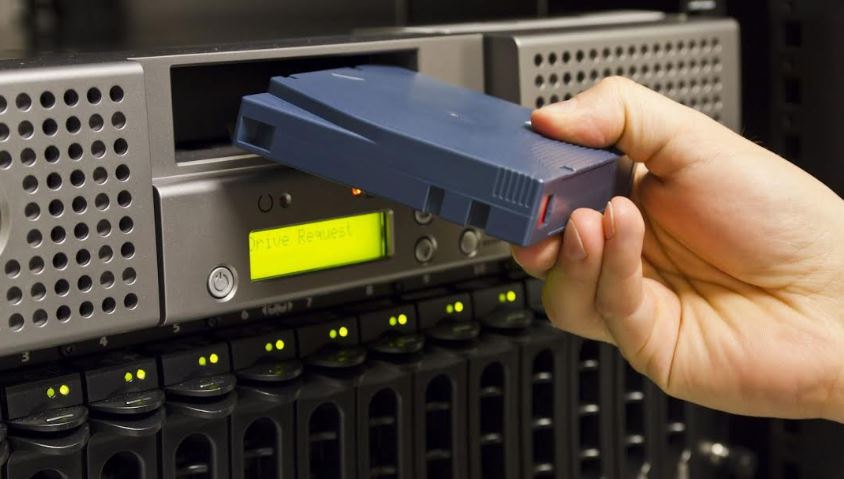
Operating a data center is expensive. Upgrades to the equipment, power, and cooling are all gradually added up.
- 01. 1. Reduce Energy Cost With Tape Storage
- 02. How Energy Saving Works
- 03. 2. Reduce the Cost of Hardware Replacement
- 04. 3. Reduce Storage Space Needs
- 05. 4. Cut Cooling Costs
- 06. The Cooling Advantage
- 07. 5. Lower Data Backup Costs
- 08. Why Tape Is Ideal for Backup
- 09. 6. Save on Cloud Storage Fees
- 10. How Tape Cuts Cloud Costs
- 11. 7. Lower Risk of Data Loss
- 12. Conclusion
- What Are Guest Post Guidelines? A Beginner’s Guide

- Link Exchange in SEO: A Complete Guide to Know

- The Art of the Hook: How to Write Enticing Introductions in Blogging and Essay Writing

- How a Website Audit Helps Improve User Experience and SEO Together

- What SEO Content Tips Top Digital Marketing Firms Always Follow

- How to Rank Your Blog in Google’s Top 10 Search Results

The global data storage market size is expected to increase from USD 255.29 billion in 2025 to USD 774.00 billion by 2032, according to a report. It is such a mammoth portion of the budget that most businesses need to manage.
This is the reference point for tape storage once more. Even though it is now considered an outdated technology, it still contributes significantly to cost savings.
The modern and improved capacity and energy efficiency of tape devices enable businesses to store more with less expenditure. Not only is tape storage cost-effective, but it also provides long-term data protection.
We will see how this is a simple but powerful tool that can be used to reduce costs in seven smart ways.
1. Reduce Energy Cost With Tape Storage
One of the largest data center costs is energy consumption. This is the best part of tape storage cost savings you should know. Drives and servers are 24/7, and this implies that they consume power continuously. However, storage tape is different. It does not require being turned on throughout.
How Energy Saving Works
Tape systems consume power only during data writing and data reading.
- End-of-process tapes are able to remain offline without using power once the process has terminated.
- This minimizes electric consumption and air conditioning requirements.
Storage tape saves large sums of money over time. A single tape library can save you up to 70 percent of energy compared to using hard drives all the time. For this reason, businesses that need to store a lot of data that isn’t regularly needed can choose it.
2. Reduce the Cost of Hardware Replacement
News: replacement of storage may be expensive. The disk drives tend to break after several years of continuous use. On the other hand, the tape devices have a very long lifespan, providing long-term reliability and durability even after years of regular use. With proper care, a high-quality tape can last up to 20 or 30 years.
Why Long Life Matters
- Reduced replacements imply reduced capital expenses.
- Maintenance requirements are also reduced.
- Less e-waste promotes green IT.
A longer life cycle of businesses would ease the cost of acquiring new equipment and would provide stable information protection throughout the years.
3. Reduce Storage Space Needs
Expansion of data centers is costly. You can reduce the cold data storage for the costs. Costs will increase with every addition of a rack and cable. This is achieved through the use of tape storage, which enables the storage of large quantities of information in compact cartridges.
- Current tapes can store up to 45 terabytes of information.
- The libraries are capable of piling up thousands of tapes in a single unit.
- None of the additional floor space or servers is required.
This is an efficient design that enables data centers to expand without the need to add new rooms and racks. Time saved translates into money saved.
4. Cut Cooling Costs
Cooling mechanisms are very crucial but costly. Any hard drive produces heat continuously, as it spins throughout the day. Storage tape is convenient because it operates only when needed.
The Cooling Advantage
- Tape libraries are not utilized for the majority of the time.
- Idle tapes produce no heat
- Lower cooling power translates to low energy bills.
This also reduces wear on cooling systems, thus extending their life. Both data and the environment are cooled and safe by using tape storage.
5. Lower Data Backup Costs
Daily data backup is critical, yet it can be costly if carried out using active disk drives. Tape is a smarter, low-cost alternative to long-term backup.
Why Tape Is Ideal for Backup
- It stores big data at low prices.
- Stored data on tape is not susceptible to cyberattacks.
- It is the best in long-term storage and recovery.
Companies can save money while still ensuring the safety of their data by transitioning from expensive disk systems to tape devices for backups. This affordability, coupled with the safety, makes the use of tape as a form of backup very attractive.
6. Save on Cloud Storage Fees
Cloud storage is cheap initially. However, the cost increases with data expansion and access charges. Tape offers both local and low-cost backup, thereby limiting reliance on the cloud. This also reduce the data center costs as well.
How Tape Cuts Cloud Costs
- Store cold data on tape instead of in the cloud.
- Lower the monthly subscription fees.
- No data retrieval or migration charges.
Inactive data can be stored in one place using storage tape, a cost-effective method of keeping important data close by without incurring additional costs. It provides companies with greater control over data spending.
7. Lower Risk of Data Loss
Data loss is not only expensive in terms of recovery costs. It influences trust and activities. Tape offers offline protection, preventing data corruption.
- Information is not vulnerable to hackers because the tapes are not online.
- High shelf life secures decades-long access.
- A lower percentage of failure leads to a lower cost of recovery.
This helps businesses save thousands of dollars in recovery expenses and prevents them from experiencing downtime. The reliability of tape offers a significant long-term financial benefit.
Conclusion
All companies desire to work with data efficiently and maintain its quality. This is possible through the use of tape storage. It saves on energy consumption, decreases heating requirements, and conserves space.
It is significantly more resilient than alternative storage solutions and provides an additional layer of protection against digital threats. With the judicious application of tape devices, companies can reduce costs and store data safely over a period of years.
With the increasing sophistication of data centers, cost control becomes even more crucial. Tape saving demonstrates that ancient notions can still result in present-day savings. It is not merely a storage solution but an intelligent method of keeping your bottom line.
