
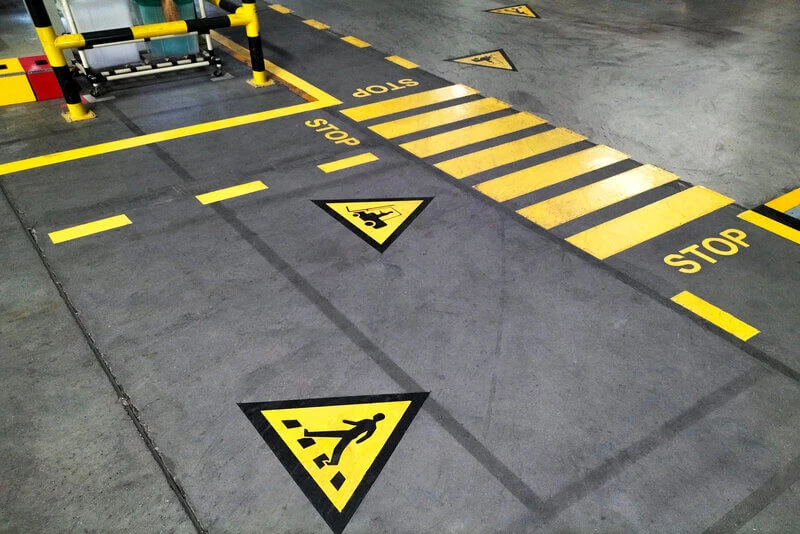
Creating a safe workplace is a legal and operational responsibility for every business. Clear floor markings help organise movement, highlight potential hazards and reduce the risk of accidents in busy environments. They also improve communication by providing clear visual guidance for employees, contractors and visitors. Professional Line Marking provides durable, accurate markings that help businesses meet workplace safety requirements while maintaining efficient, well-organised premises.
Directing Safe Movement Across the Workplace
Clear line markings help businesses manage the movement of people and vehicles safely. Marked pedestrian walkways reduce the chance of employees crossing vehicle routes, while designated traffic lanes improve the flow of forklifts, delivery vehicles and other equipment. Line markings also identify restricted areas, emergency exits and hazardous zones, making it easier for everyone to recognise where they can and cannot enter. Clear guidance reduces confusion and encourages safer behaviour throughout the workplace.
Supporting Compliance With Workplace Safety Requirements
Meeting workplace safety requirements involves creating an environment where risks are clearly identified and controlled. Professional Line Marking helps businesses achieve this by providing visible guidance that supports safe movement and workplace organisation. Clearly marked areas also assist employees in following site rules and established procedures. During workplace inspections or safety audits, well-maintained markings demonstrate that the business has taken practical steps to reduce risks and improve safety standards.
Where Professional Line Marking Delivers the Most Value
Different workplaces face different safety challenges. Clear line markings provide practical benefits in a wide range of environments, such as:
- Warehouses: Marked forklift routes, storage areas and pedestrian walkways help separate people from moving equipment.
- Manufacturing Facilities: Clearly defined production zones and hazard areas improve safety around machinery and workstations.
- Car Parks: Parking bays, directional arrows and pedestrian crossings improve traffic management and reduce confusion.
- Loading Zones: Designated loading and unloading areas support safer vehicle movement while protecting nearby workers.
- Commercial Premises: Safety markings guide visitors, identify restricted areas and promote orderly movement throughout the site.
Applying the right markings in the right locations helps businesses improve safety while supporting efficient day-to-day operations.
Keeping Safety Markings Effective Over Time
Even the best line markings require regular maintenance to remain effective. Businesses should follow these good practices:
- Regular Inspections: Check markings for fading, wear or damage so problems can be addressed promptly.
- Timely Repainting: Restore worn markings before visibility is reduced in busy work areas.
- Layout Updates: Revise markings whenever workplace layouts, equipment or traffic routes change.
- Industrial Line Marking: High-traffic industrial environments often require more durable materials and scheduled maintenance to ensure markings remain clear and effective.
Regular maintenance helps businesses keep safety markings visible, accurate and suitable for changing workplace conditions.
Conclusion
Clear line markings are an important part of maintaining a safe and compliant workplace. Industrial Line Marking help direct movement, identify hazards and support safe working practices across different business environments. When markings are professionally applied and maintained, they remain visible and effective for longer, reducing potential risks and improving workplace organisation. Maintaining high-quality line markings helps businesses support workplace safety requirements while creating a safer environment for employees, visitors and contractors.