
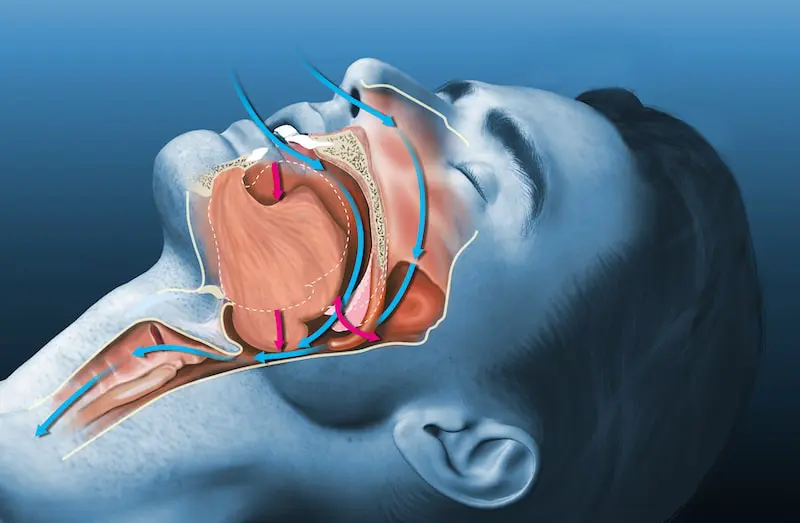
Sleep apnoea can affect breathing during sleep and may lead to disrupted rest and daytime tiredness. Treatment depends on the type and severity of the condition, and some patients may be considered for surgical options. An oral and maxillofacial surgeon can assess whether jaw repositioning may be appropriate when jaw structure contributes to airway obstruction.
What Is Sleep Apnoea?
Sleep apnoea is a condition in which breathing repeatedly stops or becomes restricted during sleep. Obstructive sleep apnoea, the more common form, occurs when the upper airway narrows or becomes blocked. At the same time, a person may experience loud snoring, pauses in breathing, waking during the night, morning headaches, and daytime sleepiness. These symptoms should be medically assessed rather than treated as an indication for surgery.
How Can Jaw Position Affect the Airway?
The upper and lower jaws form part of the facial structure surrounding the upper airway. In some people, jaw position can reduce space for the tongue and surrounding soft tissues.
When the jaws sit further back, airway space may be reduced. During sleep, relaxed muscles and soft tissues can further narrow the airway. In selected patients, repositioning the jaws can increase space behind the tongue and potentially improve airflow.
What Is Jaw Repositioning Surgery?
Jaw repositioning for sleep apnoea is generally called maxillomandibular advancement (MMA). The procedure involves surgically moving the upper jaw, lower jaw or both forwards to alter the airway structure.
The aim is to create more space within the upper airway. MMA is a significant procedure and is not appropriate for everyone.
What Does an Oral and Maxillofacial Surgeon Do?
An oral and maxillofacial surgeon specialises in surgical conditions involving the mouth, jaws, face and related structures. For sleep apnoea, the surgeon may work alongside sleep physicians, respiratory specialists, orthodontists or other healthcare professionals.
Assessment can involve reviewing medical and sleep history, previous treatments, jaw structure and airway anatomy. Imaging may also help determine whether jaw position contributes to airway obstruction.
Who May Be Considered for Jaw Advancement?
Providers consider jaw repositioning after a detailed assessment. It may be discussed when anatomical factors contribute to airway narrowing, particularly when other treatments have not provided adequate results or are unsuitable.
Factors that may be considered include:
- Severity and type of sleep apnoea
- Jaw and facial structure
- Airway anatomy
- Previous treatment and effectiveness
- General health and surgical suitability
- Individual treatment goals
Appropriately qualified specialists can tailor the most suitable surgical approach to each patient’s anatomy, needs, and treatment goals.
What Happens During the Assessment?
Assessment typically begins with a review of symptoms, sleep study results and previous treatment. The surgical team may examine the bite, jaw position and facial structure and use imaging to assess the airway.
This helps determine whether jaw advancement could address an anatomical component of sleep apnoea. Non-surgical treatments such as continuous positive airway pressure (CPAP) or oral appliances may remain more appropriate in some cases.
Conclusion
Jaw repositioning may be considered for selected patients with obstructive sleep apnoea when jaw structure contributes to airway narrowing. An oral and maxillofacial surgeon can assess the individual’s anatomy, treatment history and overall suitability for surgery. Because sleep apnoea can have different causes, a specialist assessment is important before deciding whether jaw advancement is an appropriate treatment option.