Have you ever been to a furniture shop and known what you want, but by the time you’re done shopping, you’re nothing but always like a confused mess? Maybe you have just purchased a beautiful sofa that was all set to have when you walked out of the showroom, but it was not going to fit through the front door? Perhaps you’ve invested in nice furniture, and then it just broke after a year?
You’re certainly not alone. Owning furniture is among the purchases that can either go downhill or go very much haywire. The key difference is in preparation. As you enter a furniture store with an empty wallet, you will be tempted to buy things you don’t need and to overlook the furniture you are looking for.
This is why we created the list that you’re reading right now. You will learn how to determine the right amount of money to spend, how to recognise good craftsmanship, how to test furniture, and when to buy the best value. From adding a new element to your home to building a new room, these tips will help you make wise selections and prevent pricey errors. Let’s get going with it!
Measuring Your Space Like a Pro
Nothing eliminates the fun of new furnishings like figuring out that it will not fit. When shopping at any furniture store, bring your tape measure with you and get to work!
Essential Measurements to Take
There are more than just the dimensions of the room you need to know. Find the dimensions of doorways, hallways, stairs, and narrow corners where the furniture must pass through. If you’re using a tall bookcase or wardrobe, remember to check the ceiling space. Record all on a notes app on the phone so you always have the measurements at your fingertips.
How Do I Know What Size Furniture to Buy?
Think about how and why the room will be used and the flow of people. One mistake that is often made is purchasing furniture that is too large for the room, creating a claustrophobic effect. Outline floor placement of pieces with painter’s tape. This easy technique will keep you from paying a lot of money for returns and too much trouble.
Understanding Furniture Quality and Materials
In that case, what should I search for when purchasing furniture? However, there’s sometimes more than one way to discover quality indicators and realising what to look out for is the key to their success.
Solid Wood vs Engineered Wood
Solid wood furniture will last for a longer time and can be refinished several times. Engineered wood is less expensive but not as durable as solid wood. Be sure to read labels: If they say “wood effect” or “wood-look,” it’s likely you’re getting a synthetic option.
How to Spot Quality Craftsmanship
Look at the joints. High-quality construction is shown by dovetail and mortise-and-tenon joints. Is that it—staples and glue? That’s a red flag. Open cabinets and drawers. Open drawers and cabinets and inspect backing surfaces. Quality pieces have attention to detail even in places you won’t normally see.
What Is the Best Material for Long-Lasting Furniture?
On upholstered items, check for high-density foam and hardwood frames (such as oak or beech). Solid hardwood or quality plywood will perform better for tables and storage than particle board. Leathers, dense weave fabrics are more durable than synthetic materials.
Choosing the Right Furniture Store
Furniture stores come in all different shapes and sizes. What makes a great furniture shop different?
What to Look for in a Retailer
Look at the reviews on the Internet, but don’t pay attention to any single complaint. Good stores have clear return policies, reasonable warranties and staff that are knowledgeable and listen instead of selling. There is some protection under Australian legislation; however, a reputable retailer will do more than the law requires.
Online vs In-Store Shopping
These are both good options. The advantages of shopping online are convenience and sometimes less expensive. Shopping in-store allows you to experience the comfort, true colours and quality with your own eyes. There are many smart buyers who do research online first, then go to stores to try out their preferred products before they buy.
Testing Furniture Before You Commit
Don’t skip the hands-on assessment. The minutes in the store can save a lot of years of regret.
How to Properly Test a Sofa or Chair
Don’t just perch on the edge politely. Sit in a proper sitting position, lean back and spend at least 5 minutes in that position. Take your partner and/or family members along – what is comfortable for one may not be for another. Try various positions such as reading, watching TV, lying down.
Checking Drawers, Hinges and Moving Parts
Open and close items several times. Drawers ought to slide and close easily. Doors shouldn’t sag or swing open on their own. If table legs are wobbly or chairs are shaky, it will be a deal breaker. These tiny tests are a great indication of furniture’s durability.
Delivery, Assembly and Warranties
Your furniture isn’t complete until it’s in your home and it’s working as it should be.
What Delivery Options Should a Good Furniture Store Offer?
Check if they have white-glove service (which means they will take the packaging away and place the item in the room of your choice). Old furniture removal is also available at certain stores. Make sure delivery timelines are always agreed upon in writing, with a promise of “a few weeks” that can end up being months.
Understanding Warranties and Assembly
A warranty that guarantees the product’s quality for a period of 2 years or more is required for manufacturing defects. Be sure to read the fine print to know what may be excluded from the warranty. When you go shopping for furniture, also inquire about how furniture is assembled. For people who are handy and have the correct tools at their disposal, flat-pack construction can conserve cash. But when it comes to complicated components or when time is of the essence, some professional assembly can be worthwhile.
Your Complete Furniture Store Checklist at a Glance
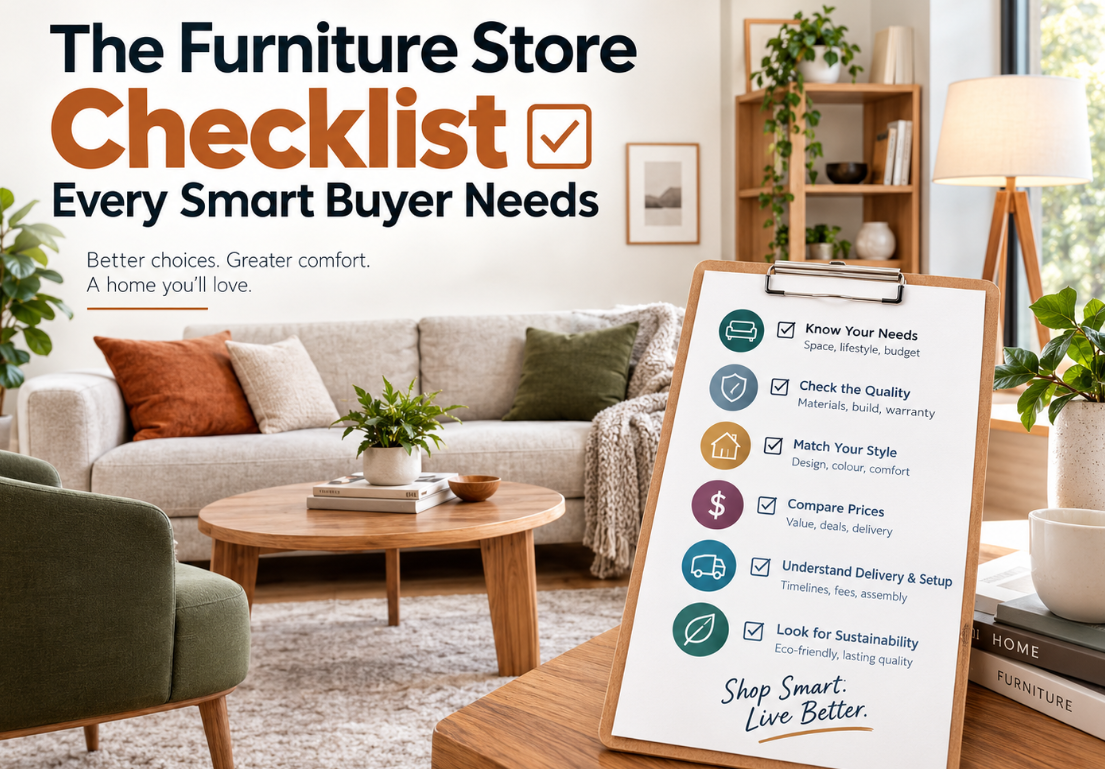
Let’s tie it all up. When purchasing, don’t forget to establish a real budget, take precise measurements and perform research on furniture quality clues. Look for furniture retailers that have good reviews and have specific policies.
When in store, test everything properly. Make sure to sit on sofas for a minimum of five minutes, look into all of the drawers and the hinges, and refrain from being rushed by enthusiastic salesmen. Check out delivery details, warranty, and whether it needs to be assembled or not.
Last but not least, consider when and how it can be sustained. With a little patience, you can save a few hundred dollars, and in the long-term, you can save money and the environment by investing in quality, sustainable furniture. Now that you have this checklist in hand, you can shop savvy and decorate with assurance. Happy furniture hunting!