
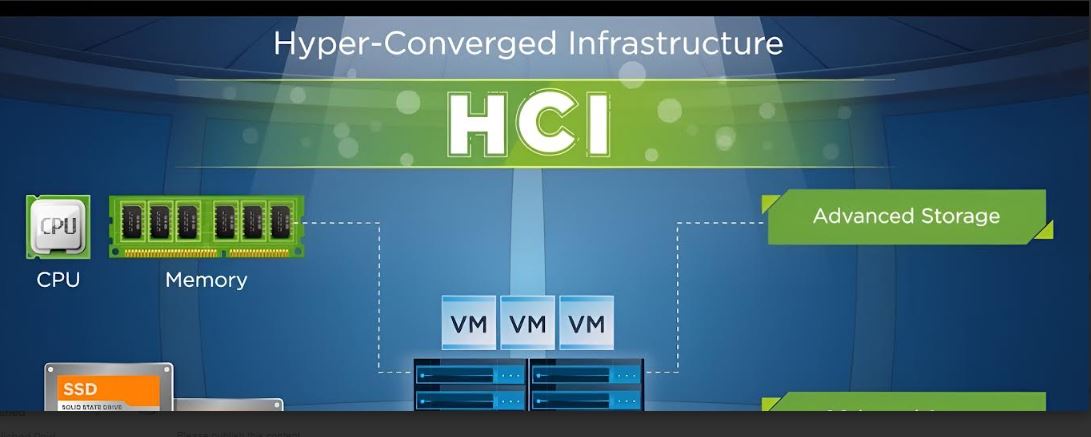
The hyper converged infrastructure (HCI) market is expected to reach almost US$27.1 billion by 2025.
This increase demonstrates the speed with which organizations are moving toward a single, integrated system, rather than complex IT systems. Businesses desire quicker performance, effortless scaling, and reduced expenses.
That is where HCI steps in. It is a combination of storage, computing, and networking. This simplifies and makes IT management more reliable. Whether it is a small company or a large one, everyone desires an arrangement that saves time and increases productivity.
Here, we’ll go over the six primary benefits of switching to a hyper-converged IT model.
1. Less Hassle, Simplified IT Management
Conventional IT systems comprise distinct storage, networking, and server components. They are more time-consuming and resource-intensive to manage. The integration of all these elements into a single platform is what a hyper converged infrastructure does. This implies that IT teams can manage the entire system through a single dashboard.
Unified Management to Facilitate Operations
HCI offers user-friendly management applications that minimize the use of complicated procedures. Teams can monitor performance, update, and correct problems more quickly.
Key benefits include:
- Fewer manual tasks
- Less downtime
- Faster troubleshooting
This setup enables the teams to concentrate on innovation rather than on routine maintenance.
2. Budget Control Through Cost Savings
Traditional data centers may be expensive to construct and maintain. Maintenance costs, energy consumption, and hardware upgrades are costly. In HCI, the companies save money by having fewer physical components.
It minimizes hardware requirements as storage and computing are integrated into a single system. This implies reduced power consumption and reduced space.
Savings come from:
- Fewer hardware purchases
- Lower cooling and power use
- Reduced maintenance costs
- No need for separate IT tools
These economies of scale make HCI a prudent long-term investment for expanding firms.
3. Enhanced Data Protection and Reliability
One of the greatest concerns for modern enterprises is data security. A hyper converged infrastructure offers built-in data security with backup, disaster recovery, and encryption features.
In case of failure in one system, another one automatically takes its place. This minimizes the chances of data loss and downtime.
Greater Backup and Recovery Capabilities
HCI maintains data across multiple nodes. In the event of a node failure, the system will restore information within a short time, without affecting the user.
Main advantages:
- Continuous system uptime
- Built-in data encryption
- Reliable disaster recovery
- Fast recovery of lost files.
These characteristics render HCI a reliable option for companies that handle sensitive data.
4. Simple Scalability to Expanding Requirements
The IT requirements of businesses evolve as the business expands. The process of adding resources in a conventional arrangement is complicated and expensive. HCI, on the other hand, scales easily.
A hyper converged infrastructure enables you to add new nodes to increase storage and computing capacity easily. This is done within minutes rather than days.
Growth Without Disruption
No need to upgrade old hardware or experience downtime. You simply increase capacity as your business expands.
The advantages of scalability are:
- Seamless upgrades
- Minimum service disruption.
- Expansion of resources on demand.
- Flexible system design
This renders HCI the best choice in businesses that anticipate quick or unforeseen expansion.
5. Better Performance and Speed
The contemporary business world is all about speed. HCI utilizes technologies such as SSD storage and smart caching to deliver faster data access and enhanced performance.
HCI systems are more efficient since they have fewer components to manage. This implies faster responses, analytics, and a more seamless user experience.
Performance highlights:
- Faster data processing
- Shorter load times
- Consistent system uptime
- Better user satisfaction
Teams can work more efficiently and make decisions in real-time, resulting in improved performance.
6. Cloud and Remote work Are Very Beneficial
Remote work and cloud adoption have become the norms in industries. HCI facilitates both with ease through the provision of a virtualized environment that links local and cloud resources.
Benefits include:
- Secure remote access
- Easy cloud integration
- Streamlined app delivery
- Uniform functionality across devices.
The more teams work remotely, the better HCI provides a smooth and secure experience.
Conclusion: The Smarter Way to Modernize IT
A change to the hyper converged IT model is not just a technology upgrade. It is a move towards easier management, reduced expenses, enhanced data security, and enhanced performance. Businesses can achieve flexibility, speed, and control all within a single, unified system.
The increasing popularity of hyper converged infrastructure indicates that it is not only a trend but also a viable step to the future of IT. Those companies that adopt it early have an advantage in terms of efficiency and scalability. The message is simple, streamline your setup, increase productivity, and be prepared to take the next step.