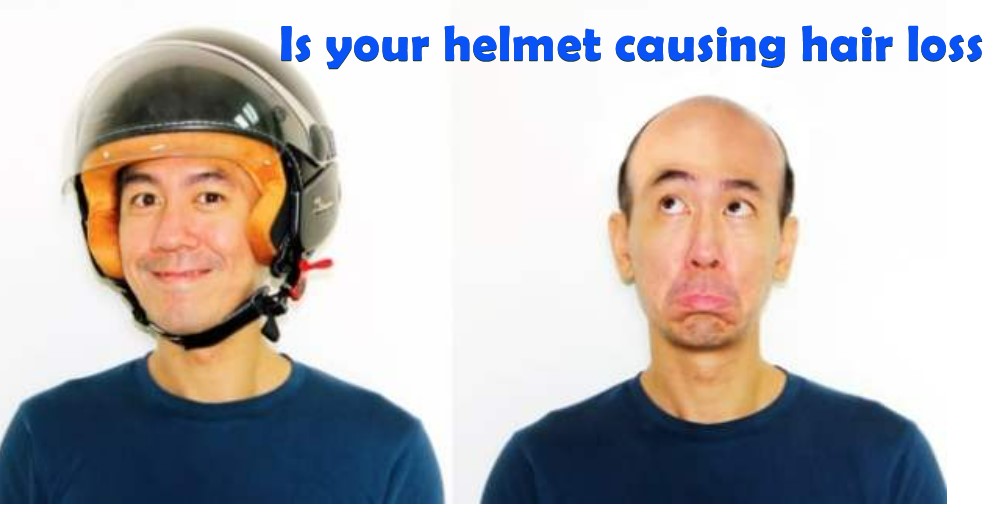
Is your helmet causing hair loss
Hair loss is always a concern for men, and there are a lot of products and treatments on the market that help prevent and treat hair loss.
Whether you’re riding a motorcycle or playing sports, a helmet is always a smart way to protect yourself from injuries to your head. But have you noticed that your hair falls after wearing your helmet for a long time is increasing?
Is your helmet causing hair loss? You can protect your hair from damaging UV rays while you’re riding, even though it is Haircuts For Men and women. Protect your hair and your head with these tips.
Wondering why this is happening? Let’s figure it out!
In this blog, we will look at the causes of hair loss and the most effective treatments.
Reasons why wearing a helmet can cause hair loss
These are the common reasons for hair loss due to wearing the helmet
Traction Alopecia
The word ‘traction’ means to pull or stretch. Traction Alopecia is hair loss caused by repeated pulling or stretching of hair strands. It is a condition observed not only in people who wear helmets daily but also in those who tie their hair tightly and wear braids for long periods.
Wearing a helmet in an improper way
Properly wear the helmet to prevent hair loss. You have to make sure you don’t pull your hair too hard as you put on your helmet. If you don’t feel any pull or traction when you’re wearing your helmet, that means you’re wearing it properly.
Helmet Hygiene
When you wear a helmet often for a long time, it will be very healthy. Due to dust and sweat, it eventually becomes a place for the bacteria and fungi growth, which is also one of the leading cause to hair loss. This later casue to make your hair thin and stops you from getting new hair growth.
Helmet and Dandruff
If you are dealing with ongoing dandruff, wearing a helmet for long periods might make your scalp problems worse. The heat and moisture inside the helmet can worsen your condition. Additionally, the dead skin flakes from dandruff can get trapped in your helmet.
More cyclists are starting to understand that helmets can lead to hair loss. While there is no guaranteed way to stop helmet-related hair loss, you can take steps to lessen the damage a helmet can cause to your hair.
Tips to prevent hair loss from helmets
Not wearing a helmet is not a solution to stop hair loss. However, here are some easy and useful tips that might help you take better care of your hair.
Keep your scalp and hair clean:
Dirt and sweat that builds up at your hair’s roots can worsen scalp problems like dandruff. So it becomes essential to keep your scalp and hair clean. Consider using natural hair shampoo and conditioner for the same.
Choose the fitting helmet:
When you wear a helmet that is too tight or doesn’t fit right, you can get traction alopecia. This causes slow hair loss because your hair is always being pulled back. Always choose a helmet that fits you well, not too loose or too tight. Also, take your time before putting on your helmet to avoid your hair from being pulled backwards.
Maintain the hygiene of your helmet:
Take care of your hair by taking care of your helmet. Don’t forget to clean your helmet regularly, both from the outside and inside. This will help to prevent the accumulation of dirt. Also, please keep it in a clean, well-ventilated place when you’re not using it.
Protect hair with a head scarf before wearing a helmet to avoid pulling strands.
Avoid wearing a helmet on damp hair, as drying your hair will avoid sweat build-up and minimize the chances of other hair issues.
Conclusion
Helmets do not directly cause hair loss. They protect you from accidents. However, wearing a helmet for long periods can make scalp and hair issues like dandruff and hair loss worse.
Hair loss is common, but the reasons behind it can vary. It’s crucial to know the cause and take steps to prevent it. Keep reading the tips above to learn about the causes, symptoms, and effects of hair loss. Follwings things are being summarized to keep preventing the hair loss.
- Make sure to clean the inside lining and padding of your helmet regularly.
- Rinse your hair with the right shampoo and conditioner.
- Choose a helmet that fits you well.
- If you tend to sweat a lot, consider tying a soft, natural fabric around your head.
About The Author