Manual testing refers to a basic software testing approach. In this process, testers check the performance and functions of an application without using automation tools. Manual testing is vital to understand user expectations as well as business requirements. It follows a series of structured procedures to check for functional accuracy, usability, and reliability.
Developers can identify defects at early stages and adopt quality measures. Moreover, it supports high-quality software delivery across different development environments. Aspiring professionals can join the Manual Testing Course in Gurgaon for the best industry-relevant training.
Procedures Involved in Manual Testing
Manual testing is vital for software quality assurance. Teams can validate software behaviour from an end users’ view point. Testers execute test cases without automation tools. They observe results carefully. They detect usability issues early.
Manual testing supports requirement validation and exploratory analysis. It ensures that the application meets business needs. This process remains essential even in modern DevOps pipelines.
Requirement Analysis in Manual Testing
Requirement analysis is the first procedure in manual testing. Testers study business requirement documents carefully. They understand functional and non-functional needs. They identify unclear areas early. They communicate with business analysts and developers. This step reduces defects later. Testers also identify testable features. They decide testing scope. Clear understanding ensures accurate test coverage.
Test Planning Procedure
Test planning defines the testing approach. Test leads prepare a test plan document. This document explains testing objectives. It defines timelines and resources. It explains test types. It defines entry and exits criteria.
Planning ensures discipline in testing execution. It aligns testing with project goals. It also helps in risk management.
Test Case Design and Development
Test case design converts requirements into test steps. Each test case validates one behavior. Testers write simple and clear steps. They define expected results clearly. Good test cases ensure repeatable testing. They improve defect detection accuracy.
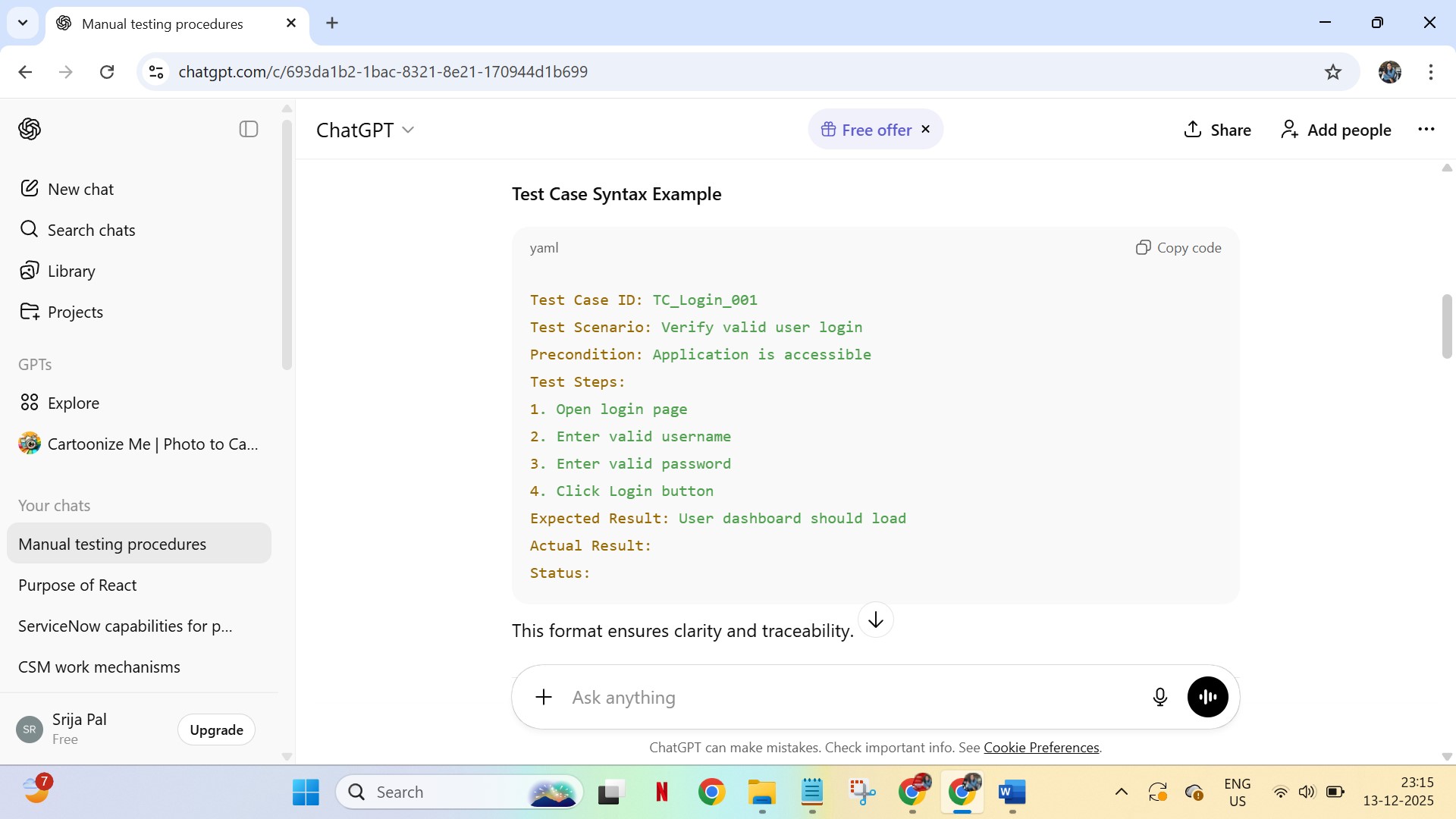
This format ensures clarity and traceability.
Test Environment Setup
Test environment setup is a critical procedure. Testers verify hardware and software readiness. They ensure correct browser versions. They confirm database availability. They validate test data setup. Stable environments prevent false defects. Testers coordinate with DevOps teams. Environmental readiness ensures smooth execution.
Test Data Preparation
Test data supports real world validation. Testers prepare valid and invalid data. They use boundary values. They use negative scenarios. Proper test data improves coverage. It reveals hidden defects. Test data must match production patterns. Secure handling of sensitive data is mandatory.
Test Execution Process
Test execution involves running test cases, where professionals mandatorily follow the defined steps. They compare actual results with expected results. They mark pass or fail status. Execution requires attention and patience.
Testers log observations clearly. They ensure consistent results across builds. Retesting is conducted are correcting errors. Check the Software Testing Course in Gurgaon to understand end to end procedures involved in manual testing.
Defect Reporting and Tracking
Defect reporting is a vital manual testing procedure. Testers log defects immediately. They include clear reproduction steps. Additionally, screenshots are attached wherever needed. Accurate defect reports help developers fix issues faster.
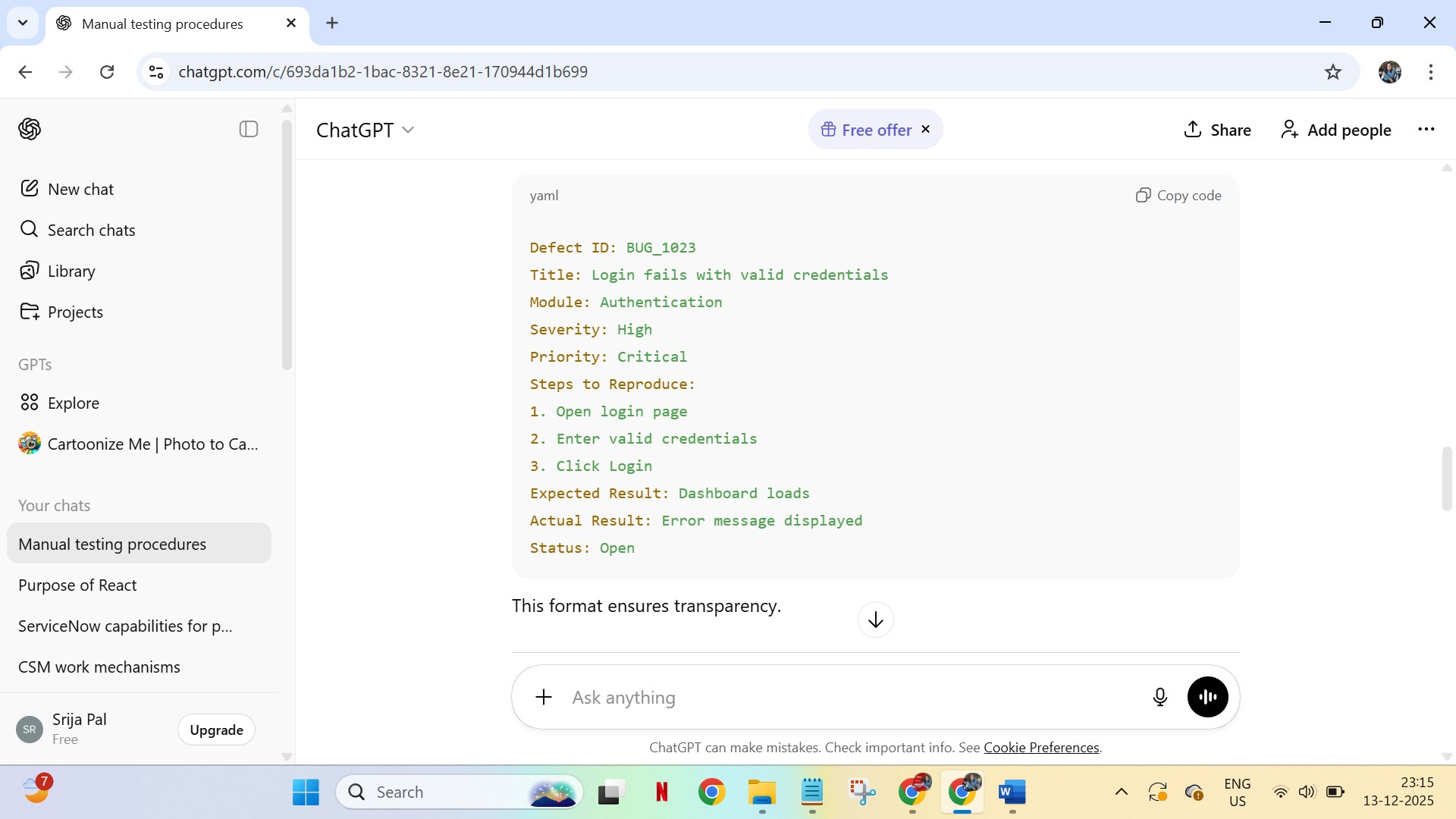
This format ensures transparency.
Defect Verification and Retesting
Once bugs are fixed, testers perform retesting to ensure that application performs as intended. This is necessary to ensure that the issues are completely resolved. This step confirms fix quality. Testers also perform regression testing to prevent new defects from showing up. Manual regression focuses on critical flows.
Exploratory Testing Procedure
Exploratory testing uses tester creativity. Testers explore the application freely. They focus on user behavior. They find usability and UI defects. This procedure does not follow strict scripts. It relies on experience. Exploratory testing finds hidden issues early.
Test Closure Activities
Test closure finalizes the testing cycle. Testers analyze test results. They calculate defect metrics. They document lessons learned. They prepare test summary reports. Closure improves future testing quality. It marks formal completion.
Traceability and Documentation
Traceability links requirements to test cases. Testers maintain traceability matrices. This ensures full coverage. Documentation supports audits. It improves accountability. Proper documentation is essential in regulated projects.
Conclusion
Manual testing procedures ensure software quality and reliability. Each step plays a unique role. Aspiring professionals can join the Software Testing Course in Delhi to get the best guidance under industry experts. Requirement analysis builds a strong foundation. Test planning ensures structured execution.
Test case design improves accuracy while proper execution matches real user expectations. Defect management is done for better collaboration. Exploratory testing adds human insight. Test closure improves future cycles. Manual testing remains essential despite automation growth. It delivers user focused quality and confidence in software releases.
Manual testing refers to a basic software testing approach. In this process, testers check the performance and functions of an application without using automation tools.
Manual testing is vital to understand user expectations as well as business requirements. It follows a series of structured procedures to check for functional accuracy, usability, and reliability.
Developers can identify defects at early stages and adopt quality measures. Moreover, it supports high-quality software delivery across different development environments. Aspiring professionals can join the Manual Testing Course in Gurgaon for the best industry-relevant training.
About The Author